
What’s New in IDEA StatiCa v25.1
What has actually changed in IDEA StatiCa v25.1, and how does it affect real steel and steel-to-concrete connection design?
Release notes list everything that changed.
Engineers care about what actually changes their work.
Every major software release promises improvements, but most updates fall into one of two categories: features you may never use, or refinements you only notice after months of daily work.
IDEA StatiCa 2025 (v25.1) is different in one important way – it quietly removes several long-standing limitations in how structural engineers design and verify steel and steel-to-concrete connections.
So, the real question is not what’s new in IDEA StatiCa v25.1, but:
As a structural engineer, what can I now do that I couldn’t do before – and why should I care?
What Actually Changes in Connection Design with IDEA StatiCa v25.1?
1. Steel-to-Concrete Anchorage Is Now Part of the Connection – Including Indian Standards
Anchorage design has traditionally been one of the least integrated parts of connection engineering. Even when steel connections were modeled in detail, anchorage checks often lived elsewhere – handled through spreadsheets, hand calculations, or simplified assumptions only loosely connected to real joint behavior.
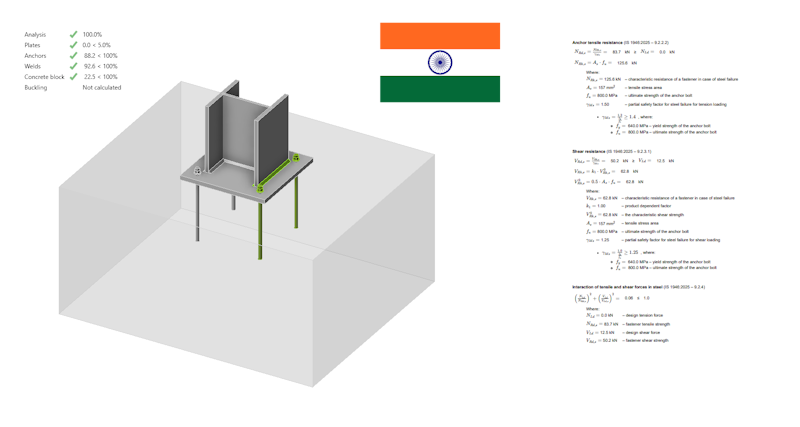
IDEA StatiCa v25.1 changes this by integrating steel-to-concrete anchorage modeling and verification directly into the connection workflow, including checks in accordance with Indian Standards (IS).
What this means in practice is not just a different calculation location, but a different way anchorage is treated in design:
- Critical failure modes – such as pull-out, concrete cone failure, and concrete breakout – are explicitly checked within the anchorage design, based on actual force transfer from the connection model.
- Anchorage forces are derived from actual connection behavior rather than assumed force splits.
- Verification logic and reporting follow the same framework used for the rest of the connection.
This matters because anchorage often governs capacity, ductility, and detailing – particularly in seismic regions or heavily loaded interfaces. Being able to verify it as part of the connection model reduces hidden conservatism, removes duplicated effort, and makes design intent far easier to justify during peer reviews or third-party checks. For engineers working under Indian Standards, it also closes a compliance gap that previously required workarounds.
2. Concrete Design Reflects ACI 318-25 – Without Disrupting Existing Workflows
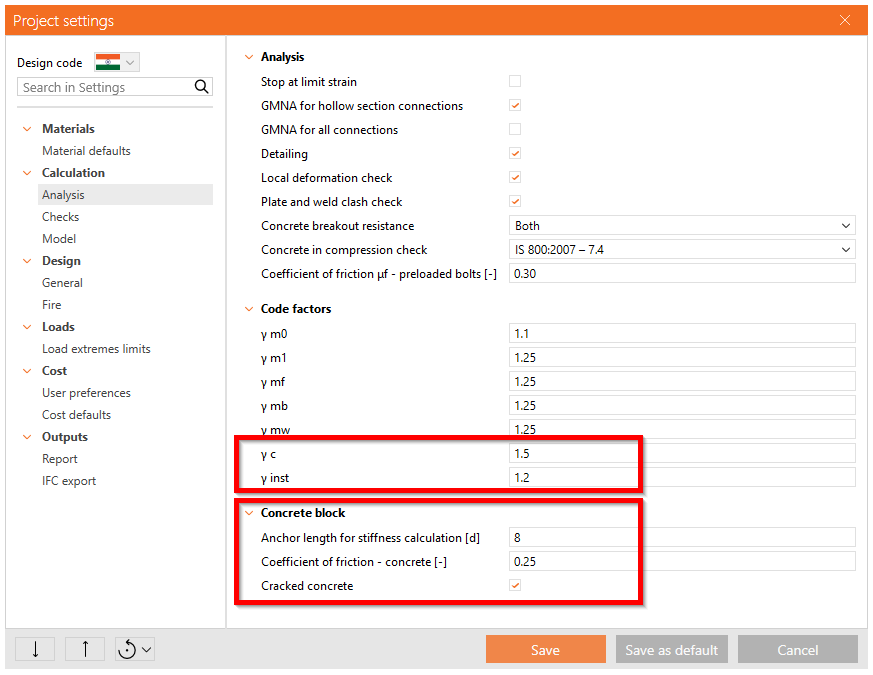
Code updates are unavoidable, but adapting workflows to them is often painful. Engineers are expected to comply with new provisions well before internal spreadsheets, legacy tools, or office standards catch up.
The benefit here is not learning something new but reducing risk. Fewer temporary assumptions become permanent, and fewer questions arise later about whether a design still meets current requirements.
3. A Smaller, Clearer Gap Between Global Analysis & Connection Checks
One of the persistent gaps in connection design is the broken link between analysis and verification – manual force transfers, misassigned sections, filtered load combinations, and simplified boundary conditions.
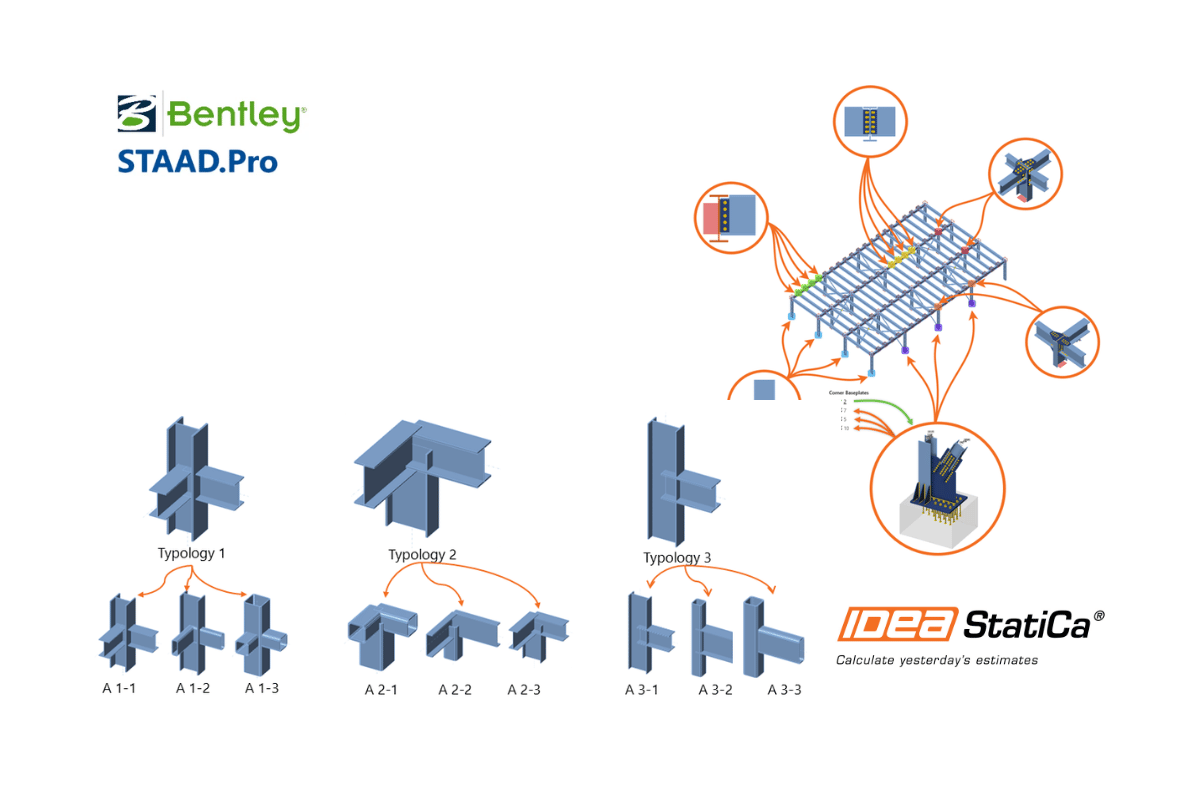
With improved BIM links to ETABS and SAP2000, IDEA StatiCa v25.1 delivers cleaner imports of geometry, materials, and internal forces – and, more importantly, better traceability between the global model and local connection checks.
In practice, this results in:
- Reduced time validating transferred inputs
- Faster identification of governing load cases
- Better alignment between analysis assumptions and connection behavior
For medium to large projects, this goes beyond productivity – it significantly reduces coordination errors that can propagate across multiple connections.
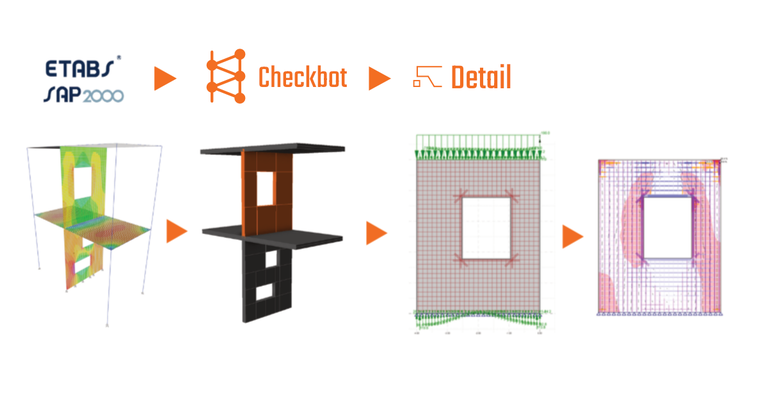
4. Large Connection Sets Can Be Verified as Projects – Not Isolated Files
Connection design does not scale easily – what works for a few connections becomes inefficient across hundreds, with repeated checks, manual tracking, and fragmented reporting.
IDEA StatiCa v25.1 addresses this through improved bulk handling, faster Checkbot performance, and streamlined report generation – enabling connection verification at a project level rather than as isolated files.
In practice, this allows:
- Efficient verification of large connection sets
- Identification of governing cases across the project
- Bulk report and BOQ generation
- Consistent documentation with minimal manual effort
For large projects, this improves standardization and reduces coordination effort without compromising accuracy.
Additional Improvements in IDEA StatiCa v25.1
Beyond the major workflow shifts, IDEA StatiCa v25.1 includes a series of refinements that experienced users will notice almost immediately in daily work.
The software handles large and complex joints more reliably, with improved stability when many members, plates, and load combinations are involved. The internal behavior of plates, stiffeners, and welds under combined actions has been refined, reducing the need for trial-and-error adjustments in complex joints. Verification logic has also been tuned to reduce unnecessary over-conservatism, bringing results closer to realistic engineering judgment.
Equally important, there is greater consistency between what is verified internally and what appears in output reports, reducing the need for clarification during peer reviews and third-party approvals.
None of these changes are headline features, but together they reduce friction, rework, and second-guessing – the things that slow real projects down.
Why IDEA StatiCa Actually Matters for Practicing Engineers?
IDEA StatiCa v25.1 doesn’t ask engineers to think differently.
It allows them to work more completely.
Anchorage no longer lives outside the model.
Concrete checks to reflect current codes.
Analysis data flows more reliably into the connection verification process.
Large projects can be checked as systems rather than collections of files.
These changes don’t just save time – they close long-standing gaps between analysis, connection behavior, and compliance that engineers have been managing manually for years.
Conclusion
IDEA StatiCa v25.1 matters because it removes the need for parallel checks that engineers have long accepted as unavoidable. Anchorage, concrete verification, and analysis-to-connection continuity are no longer separate tasks – they are part of a single workflow.
The result is not just faster design, but more reliable decisions with fewer assumptions to defend. That shift is practical, immediate, and worth testing on real projects.
If you already use IDEA StatiCa, revisit connection checks you still handle externally or conservatively – especially steel-to-concrete anchorage and large connection sets, as several of those workarounds are no longer needed in v25.1 ;
If you haven’t used it yet, the real question is where your current workflow still relies on spreadsheets, simplified assumptions, or disconnected checks – because that’s exactly where IDEA StatiCa v25.1 delivers the most value.
Connect with our team via the Contact Us page to start your free 14-day trial and evaluate IDEA StatiCa on a live project, or discuss your current workflow with our engineers to identify where it can deliver the most value.